
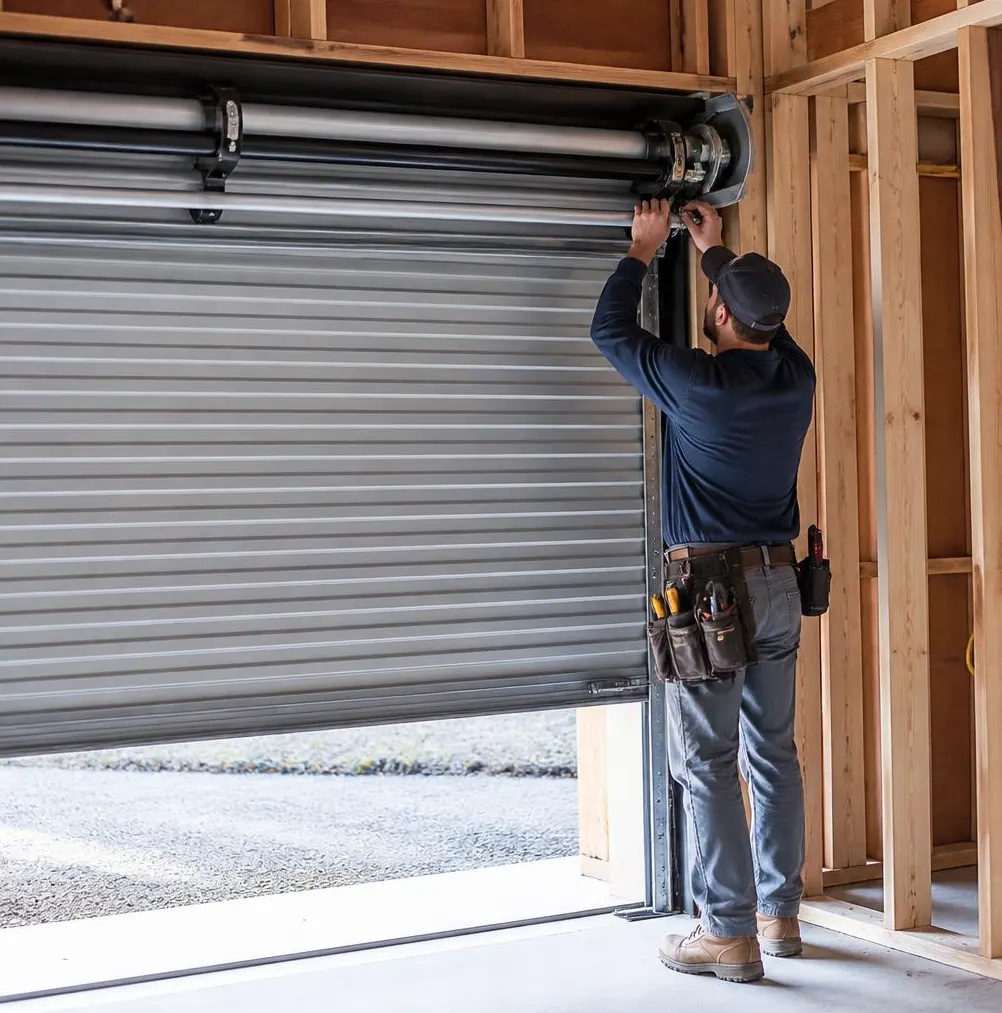
What a technician usually finds on this call
The call almost always starts the same way: one spouse says the garage door is fine, just a little stiff, and the other says it's rusting apart and needs to be replaced. When a technician shows up, the truth is usually somewhere in between. There's surface rust along the bottom panel where water pools after storms, the door is dragging a little on the track because the panel has swollen slightly, and the weatherstripping at the bottom is cracked or peeling. None of that means the door is falling apart. It does mean moisture has been sitting against the metal or wood longer than it should, and that's worth sorting out before it turns into something bigger.
Why this happens so much in this part of Florida
Garage doors here deal with a rougher combination of conditions than most other parts of the country. Humidity stays high for much of the year, afternoon downpours during hurricane season soak the lower panels and track area almost daily, and anyone near the coast gets salt air on top of that, which speeds up corrosion on screws, hinges, and steel panels. Garages also don't get much airflow, so moisture that gets in doesn't dry out quickly. Add wind-load-rated doors, which are built heavier and tighter to the frame to handle storm pressure, and you get less tolerance for swelling or warping before the door starts binding on the track.
None of this is a defect in the door. It's just what happens to steel, wood composite, and hardware when they sit in a hot, wet, salty environment for years without attention.
Rust and swelling are not the same problem
This is usually where the argument is actually happening, so it's worth separating the two.
- Rust shows up as orange-brown spotting, usually starting at the bottom panel, around screw heads, or near hinges and rollers. It's a surface oxidation problem caused by water sitting on bare or scratched metal. Left alone long enough, it can eat through thin steel panels or weaken hardware, but early rust is almost always cosmetic and treatable.
- Swelling is different. It happens when wood composite panels or insulation absorb moisture and expand slightly, or when a steel panel's seams trap water and the panel edges warp. Swelling shows up as a door that drags, a panel that doesn't sit flush with its neighbors, or a door that's harder to open by hand than it used to be. This is a fit problem, not just a surface problem, and it can affect how the door tracks and seals.
So if one of you is pointing at orange spots and the other is pointing at a door that sticks halfway up, you're both right — you're just describing two different symptoms of the same underlying moisture issue.
How to tell if it's urgent
A few quick checks settle most of these arguments without needing a technician:
- Does the door still open and close smoothly by hand with the opener disconnected? If it's dragging or binding, that's the swelling talking, and it needs attention soon, not eventually.
- Is the rust just surface spotting you can scratch off, or is there flaking, pitting, or a soft spot you can push into? Soft or flaking metal means the rust has gone past cosmetic.
- Are the rollers or hinges stiff, squeaking, or visibly orange? Hardware rusts faster than panels because it's smaller and gets less protective coating.
- Is water actually reaching the bottom panel regularly — pooling under the door, splashing up from the driveway during afternoon storms, or sitting against a cracked bottom seal? If so, the moisture problem will keep coming back until that's addressed.
What actually helps, not just a quick wipe-down
Small rust spots can be sanded lightly, treated with a rust-inhibiting primer, and repainted with an exterior-grade paint — a weekend job for one or two spots. Bigger pitting or a panel with soft, rusted-through metal is a repair-or-replace decision, not a paint job. For swelling, there's often no fixing a warped panel once it's set; the better move is replacing that section and addressing the water source, usually a worn bottom seal or poor drainage at the slab. Keeping hinges, rollers, and springs lightly lubricated also matters more here than in drier climates, since dry hardware rusts and seizes faster once humidity gets into the mix. A simple habit that helps: after a heavy storm, wipe down the bottom panel and track once it's dry, instead of letting water sit overnight.
When to call Sunrise Overhead Door Co
If the door is dragging on the track, a panel doesn't sit flush, or you're seeing rust that flakes off or feels soft underneath, it's worth having it looked at before the next round of storms makes it worse. We handle this with our garage door maintenance and tune-up service, which checks hardware, lubrication, and seals before small issues turn into stuck doors or failed springs, and with full garage door installation and replacement when a panel or section is too far gone to repair. Either way, we'll tell you straight whether you're looking at a cleanup job or a real repair — no guessing required.
If your garage door in Sunrise, FL is sticking, rusting, or just not closing the way it used to, call Sunrise Overhead Door Co and we'll come take a look and settle the argument for you.